
What Are Rehab Loans?
Rehabilitation loans, also known as home improvement loans, are a type of financing that allows borrowers to obtain funds to purchase and renovate a property. These loans are typically used to finance renovation projects ranging from minor repairs to major overhauls.
If you’re a real estate investor or are looking to buy a property to remodel (a fixer-upper), you might have heard about rehab loans. These types of loans can be a valuable tool for financing renovations and repairs, but they can also be confusing for those not familiar with the process. In this article, we will explore the basics of rehab loans, how they work, when they might be the right choice for your specific real estate investment needs, and some examples of projects that can be financed with this type of loan.

Rehab Loans vs. Renovation Loans:
Rehab loans and renovation loans are similar in many ways, but there are some key differences. Rehab loans are generally used to finance larger and more complex projects, while renovation loans are used to finance smaller and simpler projects.
What Are Rehab Loans Used For?
Rehab loans can be used for a variety of purposes, including:
- Repairs: Fixing structural damage, HVAC systems, roofing, plumbing, etc.
- Renovations: Updating kitchens, bathrooms, flooring, etc.
- Expansions: Adding living space to the property.
- Conversions: Converting a commercial property into residential or vice versa.
What Types of Projects Use Rehab Loans?
Rehab loans can be used to finance a variety of projects, including:
- Single-family homes: Townhouses, bungalows, chalets, etc.
- Multi-family homes: Apartments, duplexes, triplexes, etc.
- Commercial properties: Offices, retail spaces, industrial buildings, etc.
Who Are Candidates for Rehab Loans?
Rehab loans can be a good option for a variety of borrowers, including:
- Real estate investors: Individuals or companies buying properties to rent them out or sell them.
- Homeowners: People wanting to renovate their current home.
- Contractors: Professionals needing financing for rehabilitation projects.
Rehab Loans in the World of Real Estate Investment:
Rehab loans are an important tool for real estate investors. These loans allow investors to purchase discounted properties that need repairs or improvements and then sell them at a higher price after completing the rehabilitation.
When are Rehab loans a good option for specific real estate investment needs?
Rehab loans can be a good option for a variety of specific real estate investment needs, including:
- Purchasing discounted properties in need of repairs or improvements: Real estate investors can use rehab loans to purchase discounted properties that need repairs or improvements. This allows them to get a higher return on their investment by increasing the property value after rehabilitation.
- Financing larger and more complex renovation projects: Rehab loans are typically used to finance larger and more complex renovation projects that couldn’t be financed with a traditional mortgage loan. This enables investors to make significant improvements to the property that can increase its value and appeal to tenants or buyers.
- Increasing cash flow from rental properties: Rehab loans can be used to finance improvements in rental properties that can increase rental income and reduce vacancies. This can boost the investor’s cash flow and improve the property’s profitability.
- Rehabilitating deteriorated properties to revitalize neighborhoods: Rehab loans can be used to rehabilitate deteriorated properties in declining neighborhoods. This can help revitalize the neighborhood, increase property values, and create a more vibrant community.
- Diversifying the real estate investment portfolio: Rehab loans can be used to diversify an investor’s real estate investment portfolio. This can help reduce risk and increase the overall profitability of the portfolio.
However, it’s important to note that Rehab loans are not for everyone.
Before considering a rehab loan, investors should:
- Carefully evaluate their financial situation and ability to repay the loan.
- Thoroughly research the local real estate market and pricing trends.
- Develop a solid business plan for the rehabilitation project.
- Obtain quotes from multiple contractors to estimate project costs.
- Select a rehab loan lender with experience and a good reputation.
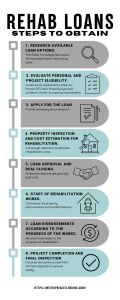
How Do Rehab Loans Work?
Applying with a Lender:
Look for a lender that offers rehab loans. Apply with your financial information, property details, and renovation project plans.
Approval and Appraisal:
The lender will assess your credit, income, and project details. An appraisal is conducted to determine the current and future value of the property.
Loan Structure and Access to Funds:
The loan is divided into “draws” based on the project’s progress. You receive funds only after completing the renovation stages with inspections.
Repayment:
You begin repaying the loan with interest once the renovation is complete. The repayment term varies depending on the loan type and lender.
Things to Consider When Applying for a Rehab Loan:
Before applying for a rehab loan, it’s important to consider the following factors:
- The total cost of the project: It’s important to have a clear budget for the project before applying for a loan.
- The value after rehabilitation: It’s important to ensure that the property’s value after rehabilitation is higher than the cost of the project and the loan.
- The terms of the loan: It’s important to compare the terms of different lenders before choosing a loan.
Institutions That Offer Rehab Loans:
Rehab loans are offered by a variety of institutions, including:
- Banks: Some banks offer rehab loans to borrowers with good credit.
- Mortgage companies: Some mortgage companies offer rehab loans to borrowers with good credit.
- Private and Hard Money Lenders: Private lenders are a good option for borrowers who do not have good credit or need a quick loan.
Financing Options for Rehabilitation and Renovation Projects
When it comes to financing your real estate investment projects, there are several options to consider. Understanding the different types of loans available can help you make informed decisions and choose the best financing option for your specific needs.
Here are some common financing options:
- Rehab Loans: Also known as rehabilitation loans or home improvement loans, rehab loans are specifically designed to finance the purchase and renovation of properties. These loans can be used to fund a wide range of renovation projects, from minor repairs to major overhauls.
- Renovation Loans: Similar to rehab loans, renovation loans are used to finance property renovations. However, renovation loans are typically used for smaller and simpler projects compared to rehab loans.
- Traditional Mortgage Loans: Traditional mortgage loans are the most common type of financing used to purchase real estate. These loans are offered by banks, credit unions, and other financial institutions and typically require a down payment and a good credit history.
- Hard Money Loans: Hard money loans are short-term, asset-based loans that are secured by the property being purchased. These loans are often used by real estate investors who need quick financing or have difficulty qualifying for traditional loans due to credit issues.
- Private Financing: Private financing involves obtaining funding from individuals or private investors rather than traditional financial institutions. Private financing can be a flexible option for real estate investors who need alternative funding sources.
- Improvement Mortgage Loans: Improvement mortgage loans are designed to finance property improvements and renovations. These loans are often used by homeowners who want to make improvements to their current home.
Understanding the different financing options available can help you choose the best option for your real estate investment projects. It’s important to carefully evaluate each option and consider factors such as interest rates, terms, and eligibility requirements before making a decision.
Tips for Using Rehab Loans:
- Work with a contractor experienced in rehabilitation projects.
- Get several quotes from different contractors before making a decision.
- Apply for a rehab loan for an amount that is sufficient to cover all project costs.
- Make sure to have a plan for how you will repay the loan.
When to consider a Hard Money Rehab Loan for a project.
Considering a Hard Money Rehab Loan for a project can be an effective strategy under certain circumstances. Here are some situations where exploring this financing option might be advantageous:
-
Need for Fast Financing
Urgent Scenarios: If you need to close on a property purchase quickly, Hard Money Loans can provide the necessary funds in a much shorter timeframe than conventional loans.
-
Difficulty Qualifying for Traditional Loans
Problematic Credit History: If your credit score is low or your credit history has blemishes, Hard Money Lenders may be more willing to work with you, focusing on the project’s value rather than your credit history.
Insufficient Documentation: For self-employed individuals or investors who cannot provide the extensive documentation required by banks, Hard Money Loans offer a viable alternative.
-
Projects with High Appreciation Potential
Significant Rehabilitations: For properties requiring extensive or rapid renovations for flipping or renting, a Hard Money Loan can provide the necessary capital to complete the improvements and significantly increase the property’s value.
-
Short-Term Investment Strategies
Flipping: If your strategy involves buying, rehabbing, and selling properties within a short period, a Hard Money Loan may be ideal due to its short-term structure, despite higher interest rates.
-
Purchasing Properties at Auction or in Distressed Condition
Non-Traditionally Financeable Properties: Many properties acquired at auctions or those in poor condition do not qualify for traditional mortgage loans. Hard Money lenders, focusing on the potential value after repair, are more likely to finance these projects.
-
Capital for Improvements Before Refinancing
Exit Strategy: If you plan to acquire and rehab a property to then refinance it with a traditional loan at a lower interest rate, a Hard Money Loan can provide the initial capital needed to make the improvement and subsequent refinancing possible.
Examples of Rehab Loan Usage:
Rehabilitation of a Single-Family Home:
- Description: Purchase and renovation of a 3-bedroom, 2-bathroom single-family home.
- Tasks: Repairing structural damage, updating the kitchen and bathrooms, installing new flooring, interior and exterior painting.
- Financing: A $200,000 rehab loan.
- Objective: Rent out the property after renovation.
Conversion of a Commercial Space into an Apartment:
- Description: Purchase and conversion of a 100 square meter commercial space into a 2-bedroom, 1-bathroom apartment.
- Tasks: Demolishing interior walls, constructing new spaces, installing kitchen and bathroom, plumbing and electrical work, painting, and decorating.
- Financing: A $300,000 rehab loan.
- Objective: Sell the apartment after renovation.
Other examples of projects that can be financed with rehab loans include:
- Rehabilitation of a multi-family building
- Conversion of an office into a co-working space
- Expansion of a single-family home
- Construction of a pool or terrace
- Rehabilitation of a commercial space for a new business
It’s important to note that rehab loans cannot be used to finance any type of project. Lenders generally require the project to have a solid business plan and for the property to have good potential value after rehabilitation.
Frequently Asked Questions about Rehab Loans:
– What is a rehab loan? A rehab loan is a type of financing that allows borrowers to obtain money to purchase and renovate a property.
– What can a rehab loan be used for? Rehab loans can be used to finance a variety of projects, including repairs, renovations, expansions, and conversions.
– Who can get a rehab loan? Rehab loans are available to a variety of borrowers, including real estate investors, homeowners, and contractors.
– How do rehab loans work? Rehab loans are typically divided into “draws” that are released as project stages are completed.
– What are the advantages of rehab loans? Rehab loans can provide financing for projects that may not be financeable with a traditional mortgage loan.
– What are the disadvantages of rehab loans? Rehab loans may have higher interest rates and shorter repayment terms than traditional mortgage loans.
– How can I find a rehab loan lender? You can find rehab loan lenders by searching online or contacting a bank or mortgage company.
– What should I consider when choosing a rehab loan lender? It’s important to compare interest rates, terms, and fees from different lenders before choosing one.
– What documents do I need to apply for a rehab loan? The documents you need to apply for a rehab loan may vary by lender but generally include a loan application, financial statements, a property appraisal, and a project plan.
– How long does it take to get a rehab loan? The time it takes to get a rehab loan can vary by lender but generally takes between 30 and 60 days.
– What should I do if my rehab loan application is rejected? If your rehab loan application is rejected, you can try applying for a loan from another lender or improve your credit before reapplying.
– Are there alternatives to rehab loans? Alternatives to rehab loans include improvement mortgage loans, hard money loans, and private financing.
– How can I get more information about rehab loans? You can get more information about rehab loans by searching online, contacting a bank or mortgage company, or speaking with a financial advisor.
Conclusion
Rehab loans can be a powerful tool for real estate investors seeking to generate profits through property renovation. This comprehensive guide has explored everything you need to know about rehab loans, including their definition, uses, functionality, benefits, risks, qualification requirements, and how to find a lender.
If you’re considering a rehab project, it’s crucial to compare different financing options and choose the one that aligns best with your specific needs. However, for investors seeking to maximize both time and profit, Metro Private Lending offers a compelling solution: private money loans.
Why Choose Metro Private Lending?
By leveraging our fast approval and funding processes, you can swiftly acquire and renovate properties, allowing for a quicker turnaround and the potential for higher returns.
Ready to Take Action?
Contact us today at 602-699-3501 or email Christopher@metro-az.com to learn more. You can also visit our website to begin your application and unlock the potential of rehab loans for your real estate investments.